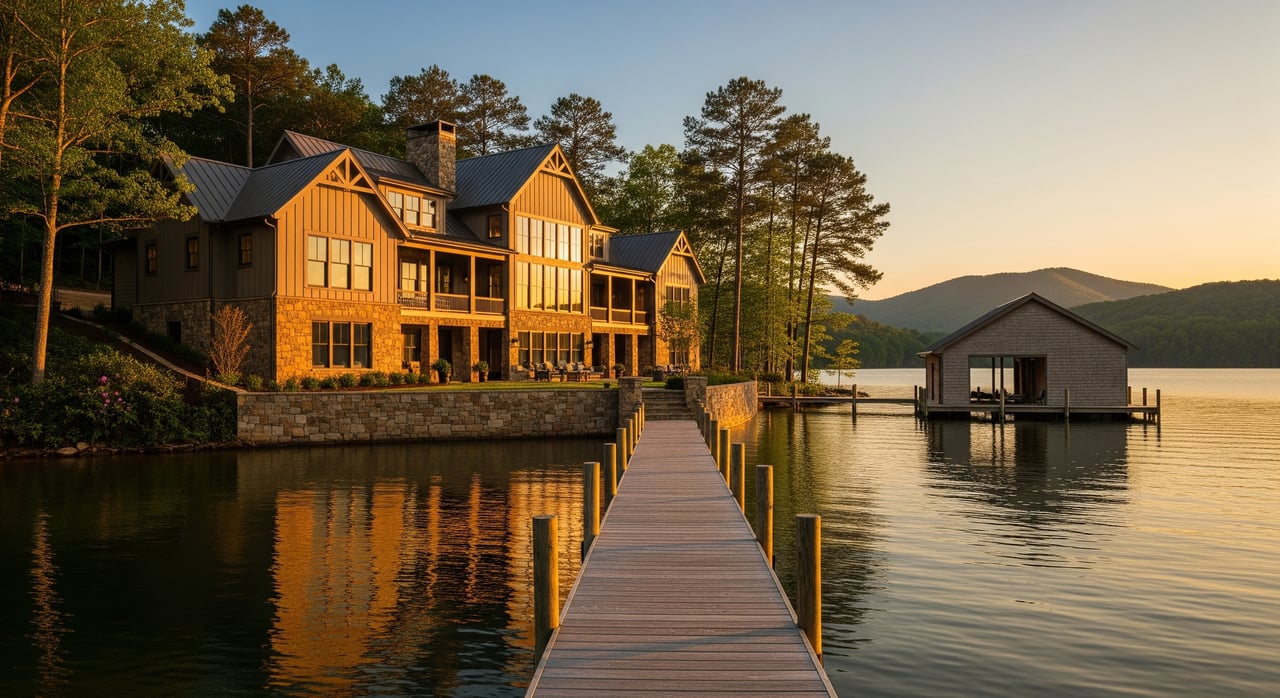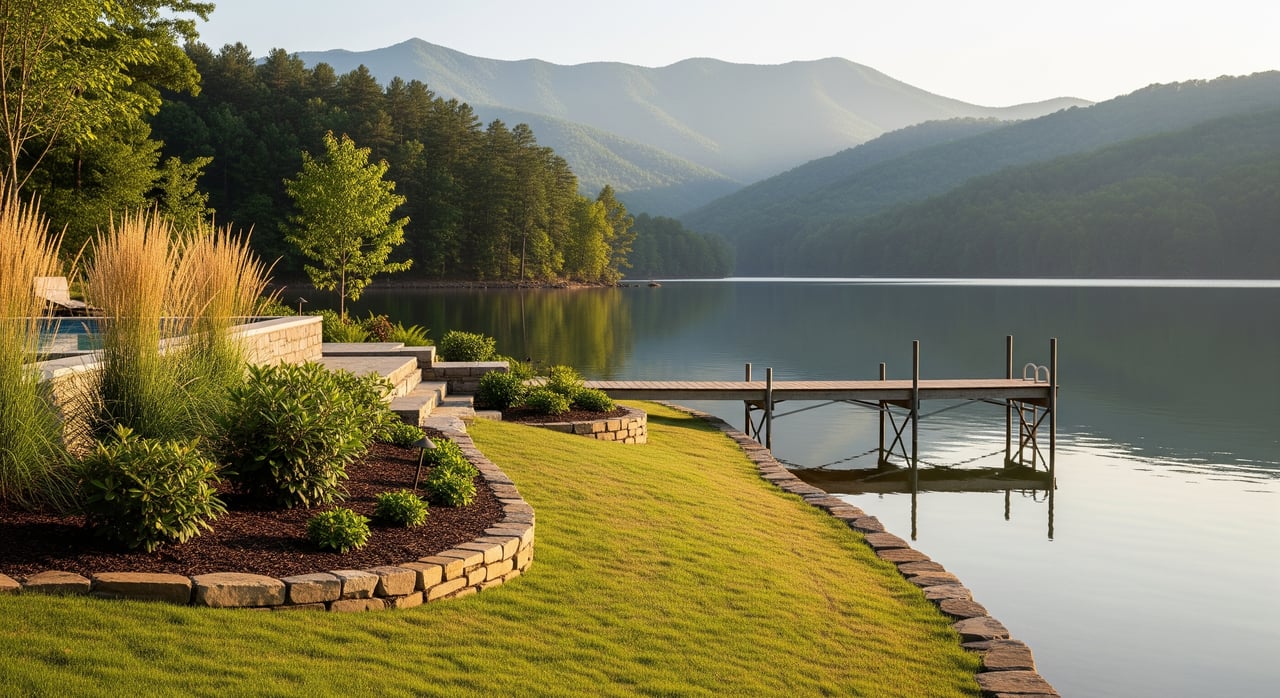
If you are dreaming of a lake home in Hiawassee, the dock is probably part of the vision. The rules that shape what you can build, replace, or repair on Lake Chatuge are not always obvious, especially when multiple agencies are involved. With a little planning, you can avoid surprises and protect your investment. This guide explains who decides what, how permits work, and which shoreline features are typically allowed so you can buy with confidence. Let’s dive in.
Who regulates Lake Chatuge’s shoreline
TVA’s Shoreline Management Program is the primary framework for Lake Chatuge. TVA manages use of TVA-owned shoreline and structures that extend into the reservoir waters, including docks, boat lifts, boathouses, riprap, retaining walls, dredging, and fill. You will usually need TVA review and approval for any dock or shoreline work that touches TVA lands or waters.
Georgia Environmental Protection Division oversees state environmental rules on the Georgia side, including water quality, wetlands, and buffer-related requirements. The North Carolina Department of Environmental Quality serves a similar role on the North Carolina shoreline. If a project affects navigable waters or federally regulated wetlands, the U.S. Army Corps of Engineers may require permits under Section 404 of the Clean Water Act.
Local governments also matter. Towns County and the City of Hiawassee can require building permits, septic and floodplain compliance, and adherence to zoning. Homeowner associations or private covenants may layer on additional rules.
How approvals work in Hiawassee
Start with boundaries and rights
Begin by confirming where your property ends relative to the lake’s full pool or high-water elevation. Determine if TVA owns the strip between your lot and the water or if a TVA easement exists. A current survey that marks boundaries and the high-water line is essential.
TVA shoreline classification and permits
Ask TVA to identify the shoreline classification for your segment. Classification influences what types of structures are allowed, where they can sit, and how large they can be. TVA will also confirm whether an existing dock is grandfathered and what modifications or replacements are allowed.
Local and state permits in Towns County
Plan to check with Towns County Planning and Zoning and the City of Hiawassee for building, septic, floodplain, and shoreline access rules. On the Georgia side, Georgia EPD may require review or certification for activities that affect water quality, buffers, or wetlands. If any portion of your project crosses the state line or affects resources in North Carolina, you may also need to coordinate with NCDEQ.
When federal permits apply
If your project involves dredging, filling, or work in federally regulated wetlands or waters, the U.S. Army Corps of Engineers may require a Section 404 permit. TVA approval does not replace federal or state permits, so plan for potential multi-agency coordination.
Timing and fees
Simple dock updates may be approved in weeks, while boathouses, bulkheads, dredging, or cross-jurisdiction projects can take months. Each agency can charge fees, and TVA may charge for permits or shoreline leases. Ask each office for current timelines and fee schedules so you can budget accurately.
Docks and shoreline options
Dock types and what is allowed
Floating docks are common on TVA reservoirs because they adjust to water levels and often have a simpler review path. Pile or fixed docks use driven pilings and can trigger added scrutiny due to in-water work. Covered docks and boathouses are more heavily regulated and can be limited or prohibited in some shoreline classifications. Boat lifts are often allowed if they meet TVA and safety requirements.
Size, spacing, and navigation
Dock footprint, placement, and spacing from neighboring structures are regulated to protect navigation and adjacent property access. Exact dimensional limits vary by location and classification, so confirm specifics for your shoreline with TVA before you design.
Stabilization and erosion control
Riprap and bulkheads typically require TVA approval and can also trigger state or federal permits if fill or dredging is involved. Many agencies encourage vegetative or bioengineering solutions that reduce impacts on fish habitat and water quality. Bulkheads often require engineered plans and licensed contractors.
Power, safety, and utilities
Any electrical work on a dock must follow local code and TVA requirements, and it should be installed by a licensed electrician. Handle fuel storage and transfers with care and in compliance with safety and water-quality rules. Erosion and sediment controls during construction are standard expectations.
Grandfathered structures
Existing docks or shoreline improvements may be allowed to remain under grandfathering but can face limits on replacement or expansion. Always confirm the status of an existing structure with TVA and ask for copies of any permits or leases tied to the property.
Georgia vs. North Carolina rules
What changes across the line
TVA’s program applies across Lake Chatuge, but state and local rules differ. In Hiawassee and Towns County, Georgia EPD and local permitting staff are your primary state and local contacts. Buffer and wetland protections, permit forms, and documentation can differ from North Carolina’s processes, so work with the agencies where your parcel is located.
Cross-border projects
If your work could affect waters or navigation across the state boundary, anticipate joint review. TVA will coordinate its role, and you may also need USACE involvement along with the appropriate state agencies. Build extra time into your schedule for multi-agency coordination.
Buyer checklist for due diligence
- Order a current survey that shows property lines, the high-water mark, and any TVA easements.
- Request copies of all existing TVA permits, leases, approvals, and any as-built drawings for docks or shoreline work.
- Ask for HOA covenants and rules related to docks, ramps, and parking.
- Verify records of past shoreline work, including riprap, bulkheads, or dredging, and confirm permits were obtained.
- Check for any outstanding violations related to shoreline activity.
- Complete a title search for easements or restrictions that could affect shoreline access.
Questions to ask early
- Who owns the land between my lot and the water, and is there a TVA easement?
- What is the shoreline classification for this segment, and what structures are allowed?
- Are existing dock permits or leases transferable, and when do they expire?
- What are the current requirements for riprap or bulkhead installation and for replacing a destroyed dock?
- Which local, state, and federal permits will be required for my plan, and what checklists are available?
Your professional team
- Land surveyor with shoreline and high-water mark experience.
- Marine or shoreline contractor who routinely works with TVA approvals.
- Real estate or closing attorney familiar with TVA leases and waterfront easements.
- Civil or coastal engineer for bulkheads, riprap, or complex dock designs.
Red flags to watch
- No recorded TVA permits or expired shoreline leases for an existing dock.
- Unclear boundary near the water without a stamped survey.
- Shoreline dominated by TVA land with limited private access rights, which can limit dock options.
- Evidence of significant erosion or unpermitted shoreline alterations.
Plan ahead, then enjoy the lake
With TVA as the lead authority and Georgia EPD, USACE, and local offices playing key roles, successful shoreline projects come down to early planning and clear documentation. If you confirm boundaries, gather existing permits, and talk to TVA and local staff before you write offers or design a dock, you will avoid most surprises. If you want a second home that pairs luxury finishes with practical lake access, thoughtful due diligence is your edge.
If you would like guidance that blends luxury-market experience with on-the-water know-how, connect with Laura Van Rensburg. You will get concierge support, local intelligence, and a clear plan for waterfront due diligence in Hiawassee and across the Lake Chatuge corridor.
FAQs
Who approves docks on Lake Chatuge in Hiawassee?
- TVA’s Shoreline Management Program is the primary authority, with Georgia EPD, Towns County and Hiawassee, and possibly the U.S. Army Corps of Engineers involved depending on the scope.
How long do shoreline permits take for a new dock?
- Simple modifications can take weeks, while boathouses, bulkheads, dredging, or multi-agency projects can take several months, so start early.
Can you build a boathouse on Lake Chatuge?
- It depends on TVA shoreline classification and site specifics, and boathouses face stricter limits than open or floating docks, so confirm with TVA before designing.
What if the existing dock has no TVA permit or an expired lease?
- Treat it as a red flag, request documentation, and contact TVA to verify status, transferability, and what is allowed going forward.
Do I need a survey before buying a Hiawassee lakefront home?
- Yes, a current survey showing boundaries, the high-water mark, and any TVA easements is essential for planning shore access and dock feasibility.
Does North Carolina have a role if my property is on the Georgia side?
- You will primarily work with Georgia agencies, but cross-border impacts or shared waters can trigger coordination with NCDEQ and federal reviewers.
Are riprap and bulkheads allowed on Lake Chatuge?
- Often, yes with TVA approval, and they may also require state and federal permits, with vegetative stabilization encouraged where feasible.