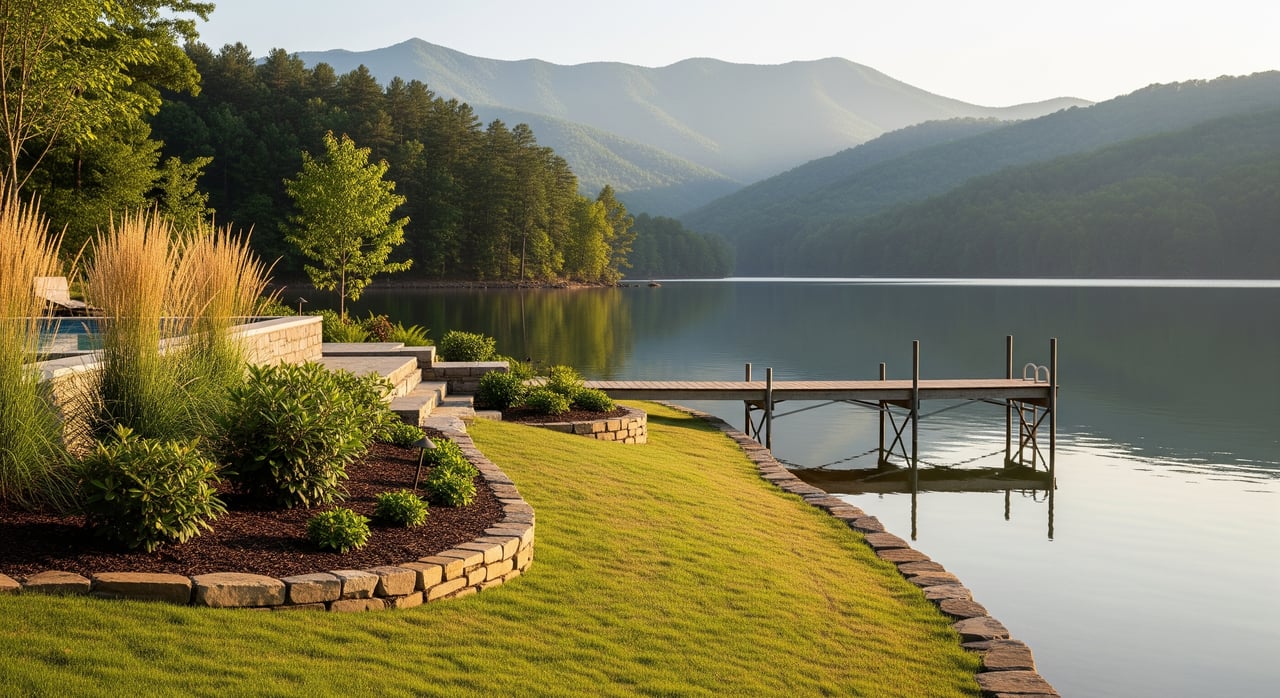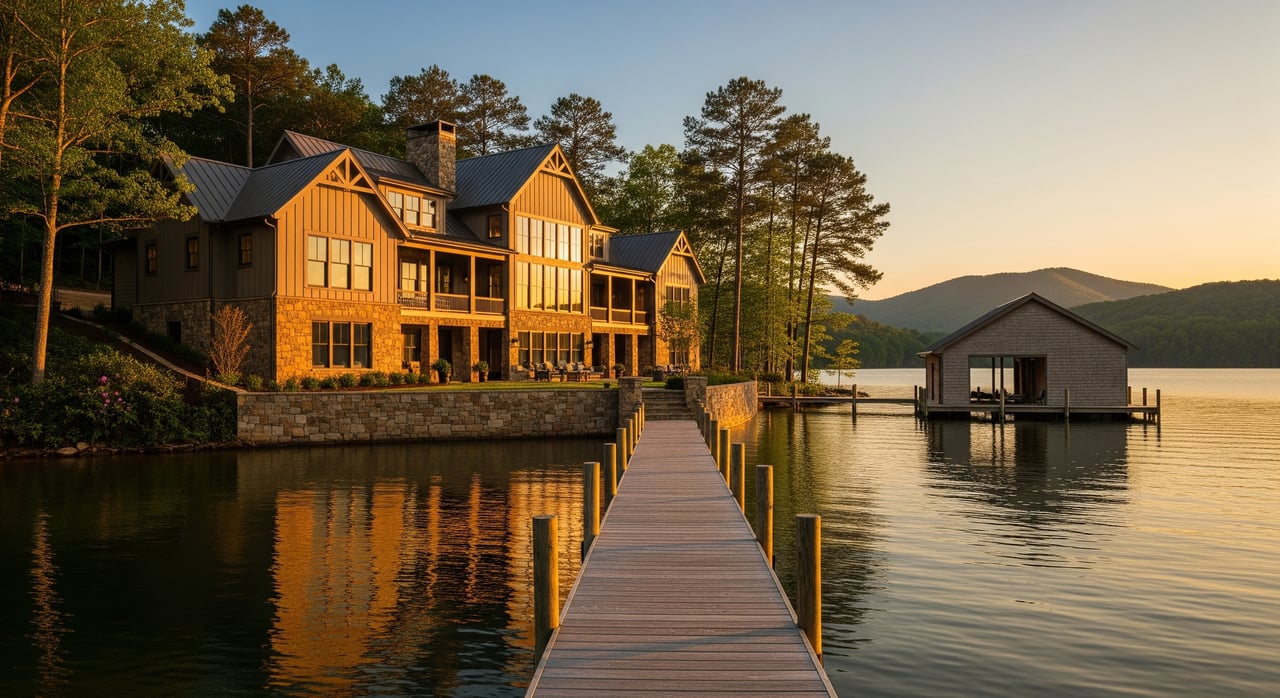
Picture your morning coffee on Lake Chatuge, boat gliding at the dock, mountains waking up across the water. Before you chase that view, you need clear language for what you are buying. Lakefront terms can be confusing, and small differences can change what you are allowed to build, where you may keep a boat, and how easy it is to sell later.
This guide gives you plain-English definitions, who regulates what on Lake Chatuge, and the key documents to verify before you make an offer. You will learn how waterfront compares to water-access, how dock rights actually work, and what to plan for with permits and maintenance. Let’s dive in.
Key lakefront terms
Waterfront vs. water-access
- Waterfront property: A lot that physically touches the lake shoreline.
- Water-access property: A lot that does not touch the shoreline but has access to the lake through a shared dock, ramp, or easement, often via an HOA or POA.
- Knowing which one you are buying affects value, convenience, and what you can build.
Riparian and littoral rights
- Riparian/littoral rights: The rights you have because your land meets the water, such as reasonable access, mooring, and surface use.
- On reservoirs like Lake Chatuge, the lakebed is often owned by the reservoir operator or the state rather than the private owner. That influences dock placement and any structure over or below the ordinary water line.
- Specific rights depend on your deed, Georgia law, and any federal shoreline rules for the reservoir.
Dock types and terms
- Dock or pier: A fixed or floating structure for mooring and access.
- Floating dock: Rises and falls with lake levels and is common on reservoirs with seasonal fluctuations.
- Boathouse: An enclosed structure over the water. These are more regulated and sometimes prohibited, depending on shoreline rules.
- Mooring slip/assigned slip: A defined space on a shared dock or marina.
- Deeded dock rights: Rights written into the property deed. Stronger than informal use and more reliable than verbal agreements.
Easements and shared access
- Easement: A legal right for others to use a portion of property, such as a shared shoreline path or driveway.
- Prescriptive rights: Rights claimed through long-term use. These are less reliable than rights recorded in a deed or easement.
- Community access: HOA or POA-controlled shoreline, ramps, and docks with rules for use and fees.
Shoreline protection structures
- Seawall or bulkhead: A vertical structure to retain soil along the bank. Often requires permits.
- Riprap or rock revetment: Sloped rock placed to reduce erosion. Widely used but regulated.
- Vegetative buffer: Plantings between the home and water to reduce runoff and erosion. Commonly required or recommended.
- Shoreline armoring: Any hardening of the bank. Expect closer review because it can affect nearby shorelines.
Natural and legal boundaries
- Ordinary high-water mark/full-pool line: The elevation used to determine who controls the lakebed. Critical for permits and surveys.
- Navigable waters: A legal concept that shapes public access and jurisdiction. Many managed reservoirs are considered public for navigation even when adjacent land is private.
Who regulates Lake Chatuge
TVA: shoreline management
- Lake Chatuge is part of a regional system with federal oversight. The Tennessee Valley Authority (TVA) uses a Shoreline Management Program to classify shoreline and approve docks, boathouses, marinas, bulkheads, and related work.
- On TVA reservoirs, you typically need TVA approval for new docks and many shoreline changes, even if you own the upland lot.
- TVA sets spacing, size, and placement standards to protect navigation, public access, and neighbors.
USACE: a comparison example
- The U.S. Army Corps of Engineers (USACE) manages other Southeast reservoirs with similar shoreline programs. Rules vary by agency and by lake, so always confirm who manages the shoreline for your specific parcel.
Georgia state agencies
- Georgia Department of Natural Resources (DNR) and Georgia Environmental Protection Division (EPD) regulate certain in-water work, water quality, and boating rules.
- Some projects like dredging or major shoreline armoring may need state review.
County and city permits
- Towns County and the City of Hiawassee control building permits, zoning, setbacks, stormwater, and erosion measures.
- Local health departments review septic location and setbacks. Older systems may need upgrades to meet current standards.
Floodplain rules
- Floodplain administration uses FEMA flood maps to identify zones and base flood elevations that affect insurance and development.
How approvals interact
- A dock or shoreline project on Lake Chatuge may require: TVA shoreline approval, local building permits, state water or erosion review if work is extensive, and septic or flood compliance.
- Federal shoreline approval from the manager is often required regardless of local permits.
What this means when you buy
Dock rights and permanence
- Confirm how dock rights are held: deeded, TVA-permitted, or HOA/association. Deeded rights are typically strongest.
- Informal use or verbal agreements can be risky. Docks without recorded or agency permits may face removal or conditions.
- For shared docks, review HOA rules, maintenance responsibility, and costs.
Permit risk and construction limits
- Even on a waterfront lot, expanding or building a dock, boathouse, bulkhead, or riprap usually requires approvals.
- TVA and state rules may limit boathouse types, dock size, spacing from neighbors, and distance relative to the full-pool line.
- Floating docks are common on reservoirs with fluctuating levels, but they still need approvals.
Septic and environmental constraints
- Septic systems must meet setbacks from the water, and soils must be suitable. Towns County Environmental Health reviews septic plans.
- Expect erosion control measures and preference for vegetative buffers to protect water quality.
Insurance, lending, and resale
- Flood insurance may be required if your lender uses FEMA map zones that trigger a mandate.
- Homeowners insurance can be higher on waterfront due to wind, water, and storm exposure.
- On resale, buyers look for transferable dock rights and documented permits. Shared or HOA-only access can be less appealing to buyers who want private mooring.
Ongoing maintenance and costs
- Budget for dock upkeep, shoreline protection, and periodic inspections or repairs.
- HOA-based water access often reduces maintenance for the homeowner but may have restrictions on boat type, size, or guest policies.
Waterfront vs. water-access: which fits you
Choose waterfront if you want
- Private shoreline adjacency and direct access.
- Potential for a private dock, subject to permits and shoreline classifications.
- Higher maintenance and insurance but closer daily connection to the lake.
Choose water-access if you want
- Lower purchase price and maintenance compared with true waterfront.
- Community docks, ramps, or slips managed by an HOA.
- Rules that simplify upkeep but may limit boat size or slip availability.
What to ask and verify
- Is the property legally waterfront? Request a recent survey showing the shoreline and any easements.
- Are dock or mooring rights deeded and recorded? Get copies of the deed, title report, and any shoreline license or permit.
- Are existing docks or shoreline structures permitted? Ask for permit records and written correspondence with TVA, Towns County, or Georgia agencies.
- Is the slip assigned, shared, or HOA-controlled? Review HOA or POA bylaws, rules, budgets, and meeting minutes for fee and maintenance terms.
- What are the local limits on boathouses, seawalls, or dock size? Request current policy language or shoreline management excerpts for Lake Chatuge.
- Where is the septic system and is it permitted? Ask for permits, service records, and any inspection reports.
- What is the FEMA flood zone for the lot? Obtain the map panel and any elevation certificate used for insurance.
Next steps for Hiawassee buyers
Before making an offer
- Order or review a current boundary survey that shows the waterline and recorded easements.
- Request the deed, title report, and any recorded dock rights or shoreline licenses.
- Collect seller documents for docks, shoreline work, and HOA access or slips.
Before planning improvements
- Contact TVA Shoreline Management about the parcel’s shoreline classification and permit paths.
- Confirm local setbacks and permits with Towns County Planning and Zoning or the City of Hiawassee if inside city limits.
- Coordinate with Towns County Environmental Health on septic location and capacity.
For financial planning
- Check FEMA flood zone status and discuss insurance requirements with your lender and insurer.
- Build a budget for dock maintenance, shoreline protection, and any HOA fees.
When in doubt
- Consult a Georgia real estate attorney experienced in waterfront conveyances.
- Engage a surveyor or shoreline consultant for high-water mark and dock feasibility.
Buying on Lake Chatuge should feel exciting, not uncertain. With the right documents and approvals, you can enjoy the lifestyle you want and protect your investment. If you are weighing waterfront vs. water-access or need help decoding dock rights, reach out to Laura Van Rensburg for local guidance backed by concierge-level service.
FAQs
What counts as true waterfront on Lake Chatuge?
- A parcel that physically touches the shoreline is waterfront. Ask for a recent survey to confirm the lot line relative to the ordinary high-water mark and any easements.
Do I own the land under the water if I am waterfront?
- Often the lakebed is owned by the reservoir operator or state, not the private landowner. This affects where a dock can sit and which approvals are required.
Can I build a boathouse or expand an existing dock?
- It depends on shoreline classification and permit rules. TVA and local authorities may restrict boathouses, set dock size limits, and require spacing from neighbors.
How do I know if a dock is legal and transferable?
- Ask for deeded rights, recorded easements, and any shoreline licenses or permits. Some licenses transfer with the property but require notice and processing at closing.
What is the difference between deeded dock rights and an HOA slip?
- Deeded rights are recorded with your property and typically stronger. HOA slips are governed by association rules, fees, and assignments that can change.
Do I need flood insurance for a lakefront home in Hiawassee?
- It depends on your FEMA flood zone and lender requirements. Check current maps and get an elevation certificate if needed for underwriting.
Who should I contact before shoreline work?
- Start with TVA Shoreline Management for lake approvals, then confirm local permits with Towns County or the City of Hiawassee, and coordinate with Environmental Health for septic considerations.